
Introduction: Bible Verses About Hope for the Future
Bible verses about hope for the future are among the most searched faith-based scripture resources for Christians in 2026 — and the need has never been more real. The future has always carried uncertainty, but today’s pace of change has made tomorrow feel less predictable for almost everyone. Major life transitions, unexpected setbacks, and quiet anxiety about what lies ahead are experiences millions of believers are navigating right now.
Scripture has been speaking into exactly this kind of moment for centuries — and it does so with remarkable specificity. This guide organizes future-hope verses across three distinct situations: new beginnings, fear of the unknown, and God’s timing — so you are not sifting through a long list searching for something that actually matches where you are. As of 2026, searches for scripture about trusting God’s plan have grown consistently. This collection meets that search with direct, organized, faith-grounded answers.
Bible Verses for New Beginnings
New beginnings are rarely as clean as they look from the outside. Whether it’s a new job, a new city, a new relationship, or simply a decision to start over after something painful, the feeling underneath is usually a mixture of hope and quiet fear.

Isaiah 43:19 — God Initiates New Things
Isaiah 43:19 is one of the most direct “new beginning” verses in scripture: “See, I am doing a new thing! Now it springs up; do you not perceive it?” The question at the end — do you not perceive it? — is genuinely interesting. It implies the new thing is already in motion before it’s visible, and the invitation is to notice rather than to produce it. For someone in the middle of a transition that feels chaotic, this reframes the question from “how do I make something new happen?” to “what is God already doing that I haven’t seen yet?”
Lamentations 3:22-23 — Fresh Start Every Morning
Lamentations 3:22-23 describes God’s mercies as “new every morning,” which connects directly to new beginnings at a micro-level — not just major life transitions, but the small fresh start available every single day. The context matters here: Lamentations is one of the most grief-saturated books in the Bible. These verses weren’t written from a comfortable place; they were pulled from the middle of genuine loss. That makes the hope expressed here more credible, not less — it wasn’t easy optimism.
2 Corinthians 5:17 — Identity-Level Newness
2 Corinthians 5:17 — “if anyone is in Christ, the new creation has come: The old has gone, the new is here!” — takes new beginnings deeper than circumstances and into identity. Many people carry the weight of a past version of themselves long after things have genuinely changed. This verse directly addresses that pattern, drawing a line between old and new that isn’t dependent on how things feel but on what has already taken place.
Bible Verses for Trusting God With an Uncertain Future
Uncertainty isn’t the same as crisis. Sometimes the hardest kind of hope is needed not when things are falling apart, but when things are simply unclear — when you genuinely don’t know what’s coming next.
Proverbs 3:5-6 — Leaning vs. Trusting
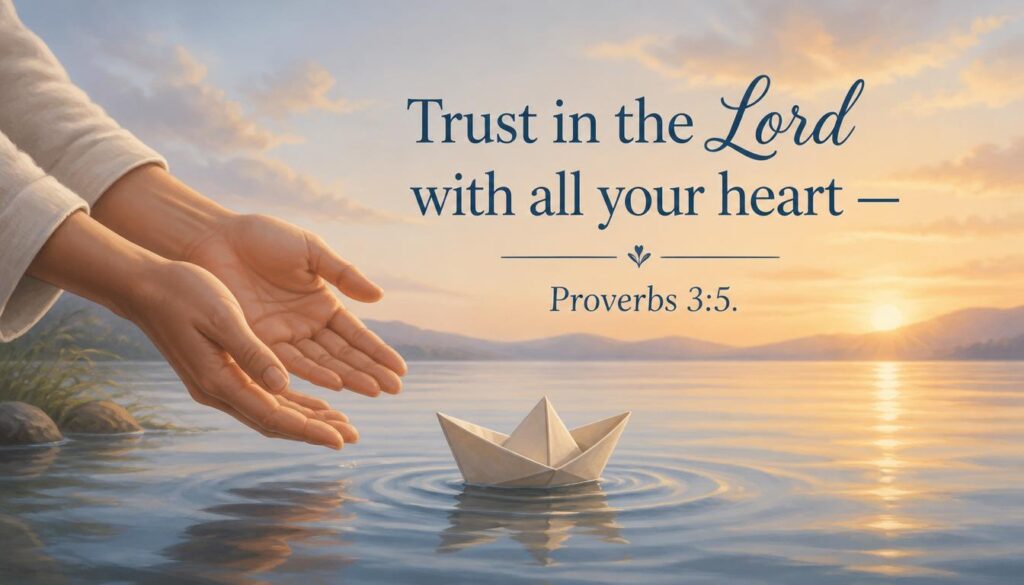
Proverbs 3:5-6 is one of the most memorized verses in the Bible for a reason: “Trust in the Lord with all your heart and lean not on your own understanding; Leaning on your own understanding isn’t described as evil; it’s described as insufficient. It’s not that reasoning and planning don’t matter, but that they have limits, and trust fills the gap those limits create.
Jeremiah 29:11 — Hope Written Into Exile
Jeremiah 29:11 is probably the most widely shared hope-for-the-future verse: “For I know the plans I have for you… plans to prosper you and not to harm you, plans to give you hope and a future.” The context most people miss: this was written to Israelites living in exile — people who had been displaced from their homes, their temple, and their normal lives. God wasn’t promising them immediate rescue; He was promising them that even in a foreign, uncomfortable, uncertain place, He still had a plan for their good. The uncertainty of where they were didn’t change the certainty of where He was taking them.
Psalm 32:8 — Guidance as a Promise
Psalm 32:8 offers a practical promise about navigating an unknown future: “I will instruct you and teach you in the way you should go; I will counsel you with my loving eye on you.” This verse frames divine guidance not as a one-time roadmap handed over, but as ongoing instruction — God teaching and counseling as the path unfolds. For someone who wants a full plan before taking a step, this verse gently reorients expectations: guidance often comes as you go, not all at once.
Bible Verses for Overcoming Fear About the Future
Fear of the future is one of the most common emotional experiences — and one of the most addressed themes in scripture. The Bible doesn’t tell readers their fear is irrational; it acknowledges it and then offers a specific reason not to be governed by it.
Joshua 1:9 — Courage as a Command, Not a Feeling
Joshua 1:9 — “Be strong and courageous. Do not be afraid; do not be discouraged, for the Lord your God will be with you wherever you go” — is striking because courage here is instructed, not waited for. Many people wait to feel courageous before acting, treating it as a prerequisite. This verse frames courage as something activated by knowledge of God’s presence, not as an emotion that precedes action.
Matthew 6:34 — Redirecting Tomorrow’s Anxiety to Today
Matthew 6:34 is one of Jesus’s most practical statements about anxiety: “do not worry about tomorrow, for tomorrow will worry about itself. Each day has enough trouble of its own.” This isn’t an instruction to be irresponsible about planning — it’s a boundary around where today’s emotional energy gets spent. Anxiety about a future problem on a future day uses today’s resources without solving tomorrow’s reality.
If today’s fear about the future is connected to a greater sense of not knowing your direction in life, our guide on Bible verses for when you feel lost addresses that particular experience more specifically.
Bible Verses About God’s Timing for the Future
One of the hardest aspects of hoping for the future is that God’s timing and our preferred timing are rarely the same. Scripture addresses this directly — not by telling readers to suppress frustration about waiting, but by offering a framework for why timing matters.
Ecclesiastes 3:1 — Seasons Have Purpose
Ecclesiastes 3:1 — “There is a time for everything, and a season for every activity under the heavens” — is one of the most balanced statements about timing in scripture. It doesn’t promise that every season will be pleasant, but it frames every season as purposeful.
Habakkuk 2:3 — The Appointed Time Will Come
Habakkuk 2:3 addresses the frustration of waiting for something that seems delayed: “For the revelation awaits an appointed time… though it linger, wait for it; it will certainly come and will not delay.” The phrase “it will certainly come” is a promise of arrival, while “wait for it” acknowledges the very real experience of it not yet being here. For someone watching a dream or promise seem to stall, this verse holds both the tension and the resolution in the same sentence.
Romans 8:28 — Future Framed by Purpose, Not Prediction
Romans 8:28 — “we know that in all things God works for the good of those who love him” — is often misquoted as “everything happens for a reason,” which flattens its meaning. What the verse actually says is more specific: in all things (including hard things), God is working toward good. It doesn’t say every event is good, but that even difficult events are being worked into something good. That’s a meaningful distinction for anyone navigating circumstances they can’t yet make sense of.
How to Apply Future-Hope Verses During Seasons of Change
Reading these verses during a calm moment and applying them during an anxious one are two different skills — and the gap between them is worth acknowledging.
Choosing One Verse Per Season
One practical pattern: rather than collecting a large number of future-hope verses, choose one single verse per major life season and return to it repeatedly. Jeremiah 29:11 might carry someone through a job transition; Isaiah 41:10 might be the verse that stays during a health scare. Depth with one verse often does more than breadth across many.
Speaking Verses as Prayers
Another approach many readers find helpful: reading these verses as prayers rather than statements. “Lord, I trust that you know the plans you have for me” directly applies Jeremiah 29:11 without requiring a feeling of certainty to be present first. The act of saying it becomes a practice of trust, not a report of current emotional state.
Returning to the Same Verse in Different Seasons
What we’re seeing now is readers returning to the same verse at different life stages and finding new meaning each time. A verse about new beginnings read at 22 during a college graduation carries different weight at 45 during a career change — the verse doesn’t change, but the reader does. This layered relationship with scripture is one of its distinctive qualities compared to other kinds of motivational content.
For a broader look at how love and hope work together as connected themes throughout scripture, explore our full guide. Bible verses about love and hope.
Frequently Asked Questions
Q: What does Jeremiah 29:11 mean?
A: It records God’s promise to exiled Israelites that His plans for them included “hope and a future,” not harm. Widely applied to personal transitions, it reassures readers that uncertain circumstances don’t cancel God’s purposeful plans for their lives.
Q: What is the best Bible verse for trusting God with your future?
A: Proverbs 3:5-6 is among the most cited, instructing readers to trust God rather than rely solely on their own reasoning, with a promise that He will “make your paths straight” — a directional promise for an uncertain road ahead.
Q: Is there a Bible verse for starting over after failure?
A: Isaiah 43:19 — “I am doing a new thing” — is widely used for fresh starts after loss or failure, framing newness as something God initiates rather than something the reader must produce through effort or worthiness.
Q: What does the Bible say about not fearing the future?
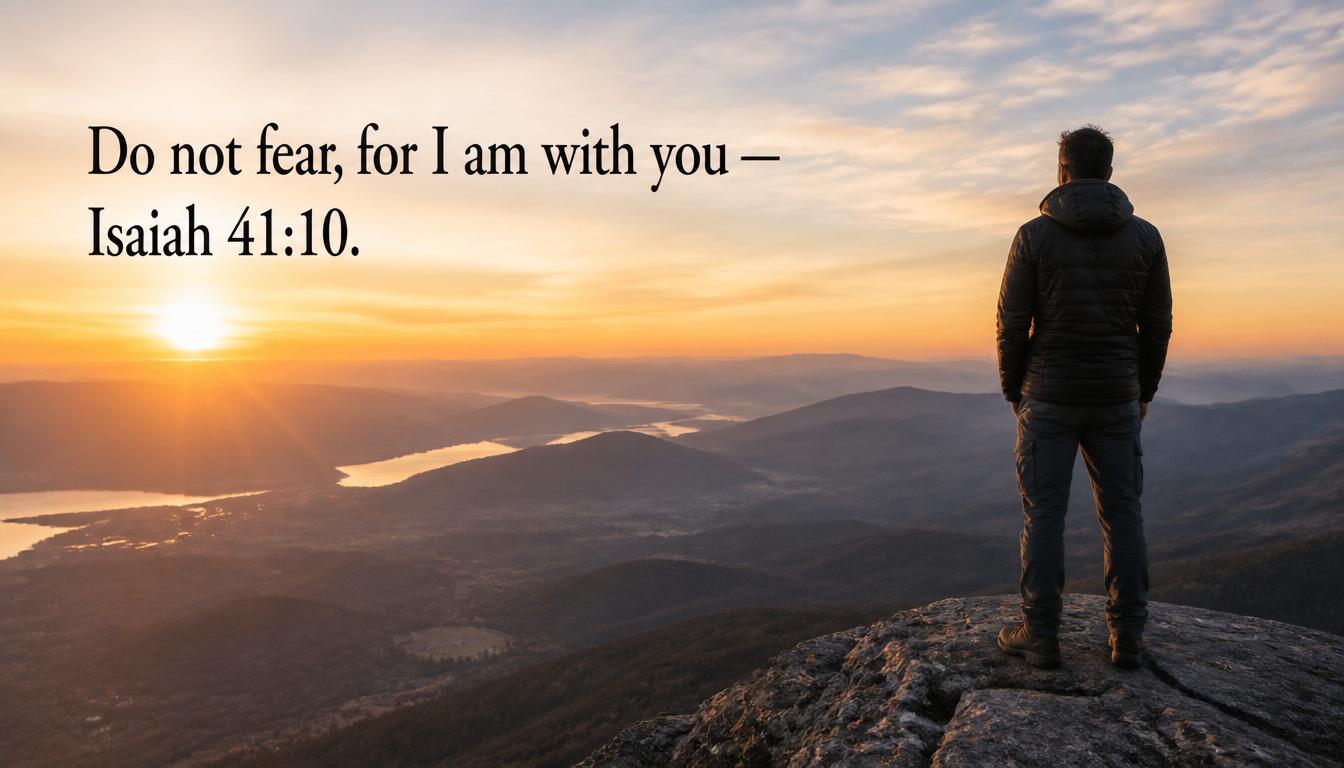
A: Isaiah 41:10 directly addresses fear about what’s ahead, pairing a command (“do not fear”) with a reason (“I am with you”) and three specific promises — strength, help, and being upheld. Joshua 1:9 similarly frames courage as activated by God’s presence, not by circumstances being resolved.
Q: What Bible verse addresses anxiety about tomorrow?
A: Matthew 6:34 is Jesus’s most direct statement on this — “do not worry about tomorrow, for tomorrow will worry about itself” — framing worry about future problems as using today’s emotional resources without solving tomorrow’s realities.
Q: What does the Bible say about God’s timing?
A: Ecclesiastes 3:1 frames every season — including difficult ones — as purposeful. Habakkuk 2:3 directly addresses the frustration of what seems like a delay, promising that the appointed time “will certainly come.” Romans 8:28 frames God’s timing around working toward good, not simply allowing events to unfold randomly.
End-of-article CTA:
The future is uncertain — that part doesn’t change. But what scripture consistently offers isn’t a detailed preview of what’s coming; it’s a settled confidence in who’s already there. If these verses resonated, consider choosing just one to carry through whatever season you’re in right now. And if you’re looking for how faith, hope, and love work together as a connected framework in scripture, our deep-dive guide on Bible verses about faith, hope, and love explains exactly that.


