

Introduction: God’s Love for You
Bible verses about God’s love are the most personally searched pieces of scripture among Christians in 2026 — because the question underneath most of these searches is deeply human: does God actually love me, specifically, with everything I have done and everything I am still struggling with? Scripture answers this more directly than most people expect.
This is not love as an abstract theological concept. The Bible frames God’s unconditional love as personal, specific, and completely independent of performance or perfection. In a culture saturated with comparison, achievement metrics, and conditional approval, that truth can feel almost foreign — which is precisely why it carries such weight today. This guide organizes scripture around the three questions Christians most often carry: am I loved despite my failures, am I truly known, and does God’s grace ever run out? Every verse here answers those questions directly and personally.
God’s Love Doesn’t Depend on Your Performance
Romans 5:8 is one of the clearest statements in scripture on this point: “God demonstrates his own love for us in this: While we were still sinners, Christ died for us.” The timing in this verse matters — the love wasn’t a response to improvement. It came first, while the recipients were, in the verse’s own words, “still sinners.” This flips a common assumption many people carry: that love has to be earned through good behavior, and that falling short means love gets withdrawn.
Ephesians 2:8-9 reinforces this by presenting grace as a “gift,” explicitly “not from yourselves” and “not by works.” For someone who’s spent years feeling like they need to perform well enough to deserve good things, this verse can feel almost uncomfortable at first — it removes the performance entirely from the equation.
A practical way to sit with this: think of a moment you felt least proud of yourself. Romans 5:8 isn’t describing love that arrived after that moment passed — it’s describing love that was already present during it. That’s a different kind of love than most people experience day to day, which is part of why it can take time to actually believe.
You Are Personally Known — Not Just Generally Loved
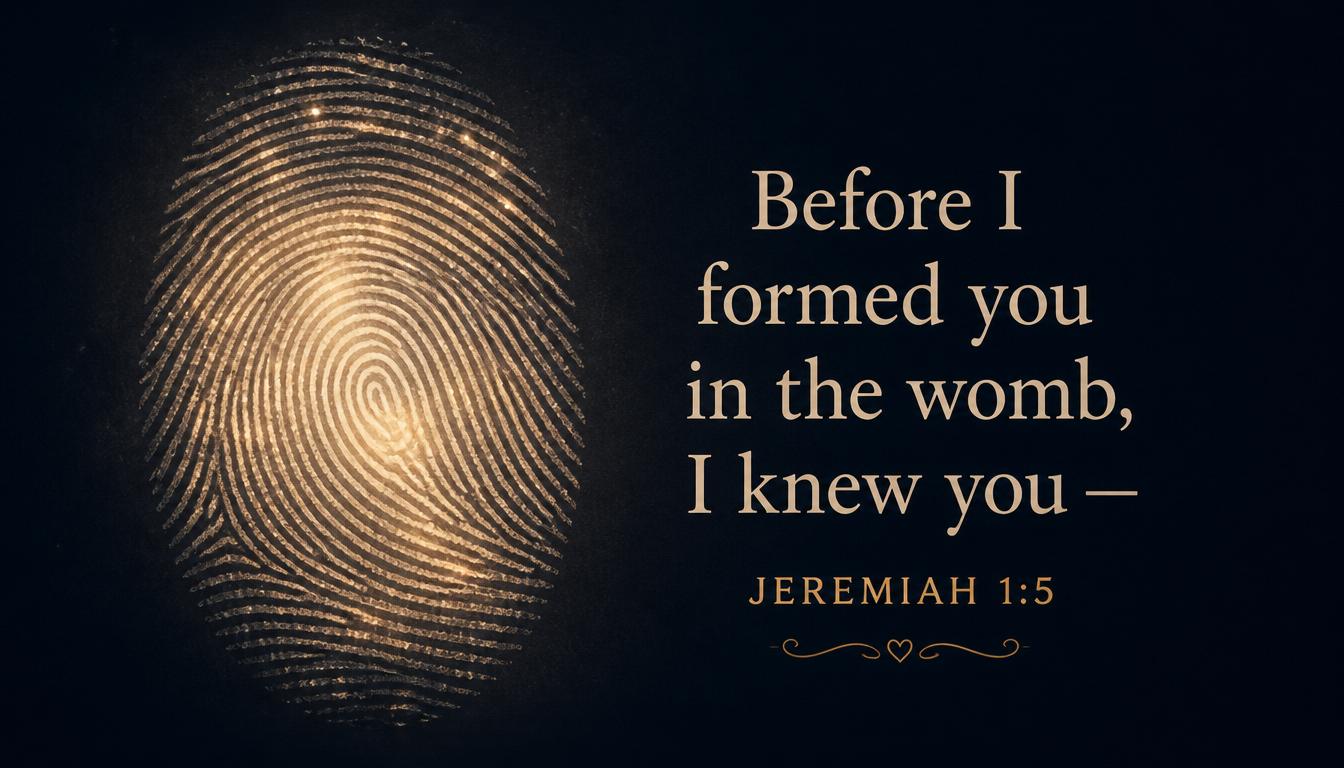
Jeremiah 1:5 says, “Before I formed you in the womb I knew you, before you were born I set you apart.” This verse is often quoted in conversations about purpose, but it’s worth noticing what it says about timing — the knowing happened before any achievements, relationships, or even choices existed. There was nothing to “know” yet in terms of accomplishments; the knowing was about the person themselves.
Psalm 139:13-14 expands on this with physical, almost intimate language: “you knit me together in my mother’s womb… I am fearfully and wonderfully made.” The word “knit” suggests something deliberate and careful — not mass-produced, not an afterthought.
For readers who’ve struggled with feeling like “just another person” in a crowded, comparison-driven world, these verses offer something different: the idea that being known isn’t about standing out from others, but about being specifically, individually known, regardless of how you compare to anyone else. Our pillar guide on Bible verses about love and hope explores how this kind of personal love connects to hope for the future.
God’s Love Doesn’t Run Out — Even on Hard Days
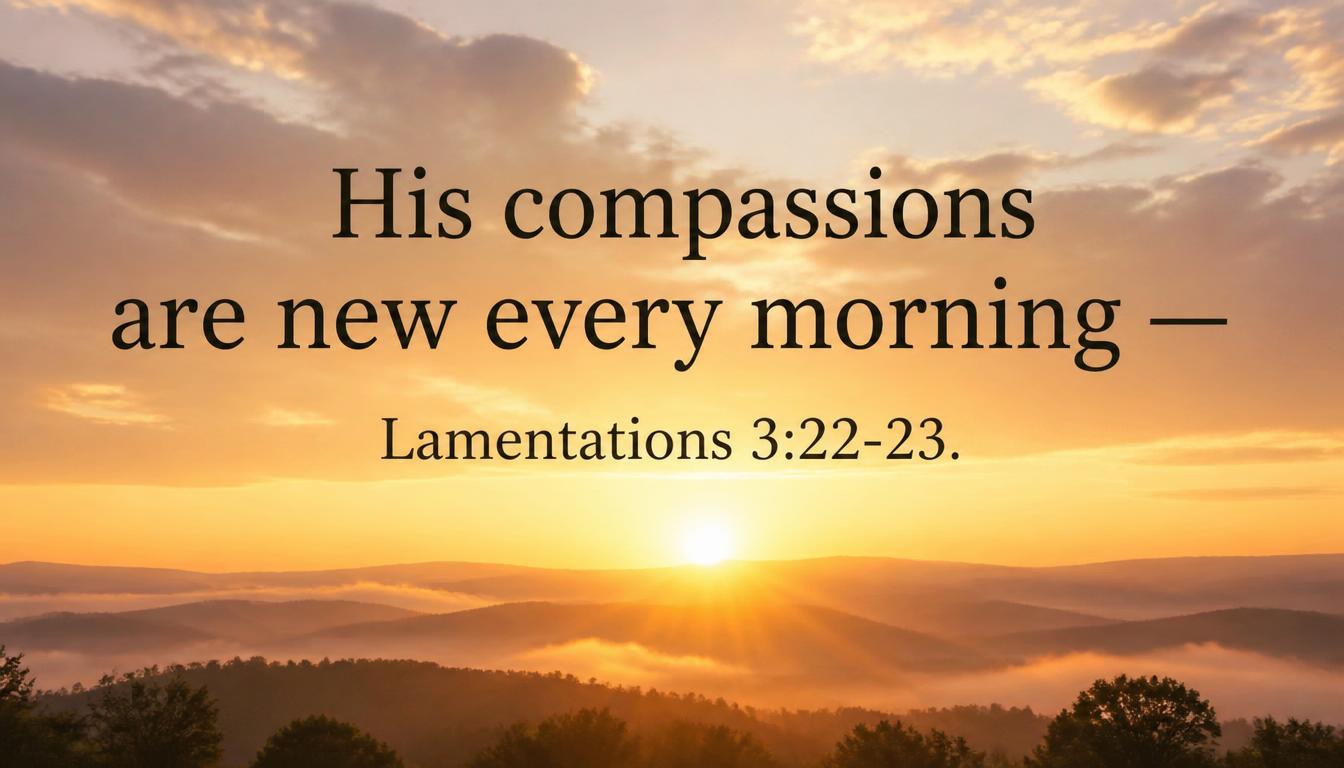
Lamentations 3:22-23 contains a phrase that’s become well-known for good reason: God’s “great love” and “compassion” are described as “new every morning.” This verse was written during a period of national disaster and personal grief — not from a place of comfort, but from the middle of genuine hardship. That context matters: the promise of renewed love wasn’t theoretical; it was spoken into an actively difficult situation.
1 Corinthians 13:8 states simply, “Love never fails.” In context, this verse follows the famous description of love’s qualities (patient, kind, etc.) and applies those same qualities to permanence — love isn’t just described by what it does, but by how long it lasts.
What’s often missed about “new every morning” is the implication that love needing to be “renewed” daily isn’t a flaw — it’s built into the design. You’re not failing by needing reassurance again tomorrow. The verse assumes that, and provides for it.
Mid-article CTA: “If you’re looking for how this kind of love connects to hope for what’s ahead, our pillar guide on Bible verses about love and hope explores that connection in depth.”
Nothing Can Separate You From God’s Love
Romans 8:38-39 is one of the most comprehensive lists in scripture: “neither death nor life, neither angels nor demons, neither the present nor the future… nor anything else in all creation” can separate someone from God’s love. The deliberate breadth here — covering literally every category Paul could think of — reads almost like Paul anticipating every excuse a reader might raise. But what if I’ve done X? But what if Y happens? The verse seems to preemptively answer “still no.”
Zephaniah 3:17 offers a different, more emotional image: God rejoicing over His people “with singing.” This isn’t a passive, distant kind of love — the imagery is active delight, the kind associated with someone genuinely happy to be near another person, not someone reluctantly tolerating them.
For someone carrying guilt or shame about something specific — a past decision, an ongoing struggle, a relationship that didn’t go well — Romans 8:38-39 isn’t vague reassurance. It’s closer to a direct answer to the specific thing being carried: that, too, is included in “nothing.”
How to Let These Verses Actually Sink In
Reading about unconditional love and feeling loved are often two very different experiences — and that gap is normal, not a sign that something’s wrong with you or your faith. One approach that helps many people: instead of reading these verses as general statements, try reading them with your own name inserted. “Before I formed [your name] in the womb, I knew [your name].” This small shift can make abstract theology feel suddenly, sometimes uncomfortably, personal.
Another approach: if a particular verse feels hard to believe, sit with why. Often it’s tied to a specific memory or belief — “I don’t deserve this because of X.” Naming that specifically, even just to yourself, can help you see the gap between what the verse says and what you currently believe, which is often the first step toward closing it.
What we’re seeing more of now is people pairing these verses with journaling — writing out the verse, then writing a sentence about what part of it feels hardest to accept, and revisiting that entry weeks later to see if anything’s shifted. It’s a slow process, and that’s expected — these aren’t verses meant to be “solved” in one sitting.
Frequently Asked Questions
Q: How do I know God loves me?
A: Scripture doesn’t frame God’s love as something to “figure out” through circumstances, but as something stated directly — Romans 5:8 says it was demonstrated “while we were still sinners,” meaning it doesn’t depend on current feelings or performance to be true.
Q: What does the Bible say about God’s unconditional love?
A: Ephesians 2:8-9 describes grace as a gift “not from yourselves” and “not by works,” directly removing performance from the equation. Romans 8:38-39 reinforces this by listing categories of things that cannot separate someone from that love.
Q: Does God still love me when I sin?
A: Yes — Romans 5:8 specifically describes God’s love being demonstrated “while we were still sinners,” meaning the love wasn’t contingent on first becoming sinless. This is consistently reinforced throughout the New Testament.
Q: What Bible verse shows God’s love for me personally, not just generally?
A: Jeremiah 1:5 and Psalm 139:13-14 both use personal, individual language — being “known” before birth and “knit together” intentionally — framing God’s love as specific to each person, not a generic statement about humanity.
Q: Is there a Bible verse for feeling unlovable?
A: Zephaniah 3:17 describes God rejoicing over His people “with singing,” an image of active delight rather than reluctant acceptance. This is often used by readers struggling with feelings of being a burden.
Q: How can I actually feel God’s love, not just read about it?
A: Many readers find it helpful to read these verses with their own name inserted, journal about which parts feel hardest to believe, and revisit those entries over time. Feeling loved often develops gradually, not instantly — and that gap is considered normal.
End-of-article CTA:
If even one of these verses felt like it was speaking directly to something you’ve been carrying, that’s worth sitting with — slowly, without pressure to feel differently overnight. Try reading it again tomorrow, maybe with your own name in place of “you.” And if you know someone who needs to hear they’re loved today, our guide on Bible verses to send someone going through a hard time can help you find the right words to share.


