

Introduction:
Most Christians don’t struggle with knowing what the Bible teaches. They struggle with what to do about it on an ordinary Tuesday — when patience runs out at work, when forgiveness feels impossible, when prayer feels like a habit that’s gone stale. Christian living is the practical side of faith: taking what Scripture teaches about following Jesus, prayer and devotion, love and forgiveness, and spiritual growth, and actually living it out in daily decisions, relationships, and struggles.
This page covers what that looks like in real terms — not a checklist of rules, but a working guide to character, habits, relationships, and the moments faith gets tested. Christian traditions differ on some of the specifics (how to pray, how to grow, which disciplines matter most), and this page names that difference honestly rather than presenting one approach as the only biblical one.
At a glance: Christian living means letting faith show up in action — not just belief, but obedience, love, forgiveness, and character shaped by the Holy Spirit over time. Scripture ties it to specific, recognizable markers: the fruit of the Spirit (Galatians 5:22-23), doing what God’s word says and not just hearing it (James 1:22-25), and loving others the way Christ loved (John 13:34-35).
It shows up in habits like prayer and Bible reading, in how believers treat people at work and at home, and in how they respond when faith gets hard — doubt, failure, unanswered prayer. None of it happens overnight, and Scripture treats it as a process rather than a finish line.
What Does It Mean to Live a Christian Life?
Living out a Christ-centered life means letting belief in Jesus actually change how a person acts, not just what they say they believe. Scripture is direct about this connection. It’s not presented as two separate tracks — private faith on one side, daily behavior on the other — but as one thing that’s supposed to show up in the other.
Faith and Works: Belief That Shows Up in Action
James 1:22-25 makes this point directly: “But be ye doers of the word, and not hearers only, deceiving your own selves. For if any be a hearer of the word, and not a doer, he is like unto a man beholding his natural face in a glass: for he beholdeth himself, and goeth his way, and straightway forgetteth what manner of man he was” (James 1:22-24, KJV).
The passage compares hearing-without-doing to a man who looks in a mirror, walks away, and immediately forgets what he looks like. The point isn’t that good works earn salvation — Christian traditions are united in rejecting that idea, even while disagreeing on plenty else. The point is narrower: real faith is expected to produce real obedience to Scripture, and the text treats belief with no visible effect on someone’s life as incomplete.
Jesus makes a related point in Matthew 22:37-40, naming love for God and love for neighbor as the two commandments everything else hangs on: “Thou shalt love the Lord thy God with all thy heart, and with all thy soul, and with all thy mind. This is the first and great commandment. And the second is like unto it, Thou shalt love thy neighbour as thyself. On these two commandments hang all the law and the prophets” (Matthew 22:37-40, KJV). That’s a useful anchor for the rest of this page — most of what follows is really an expansion of what following Jesus looks like in specific situations.
The Fruit of the Spirit as a Practical Guide
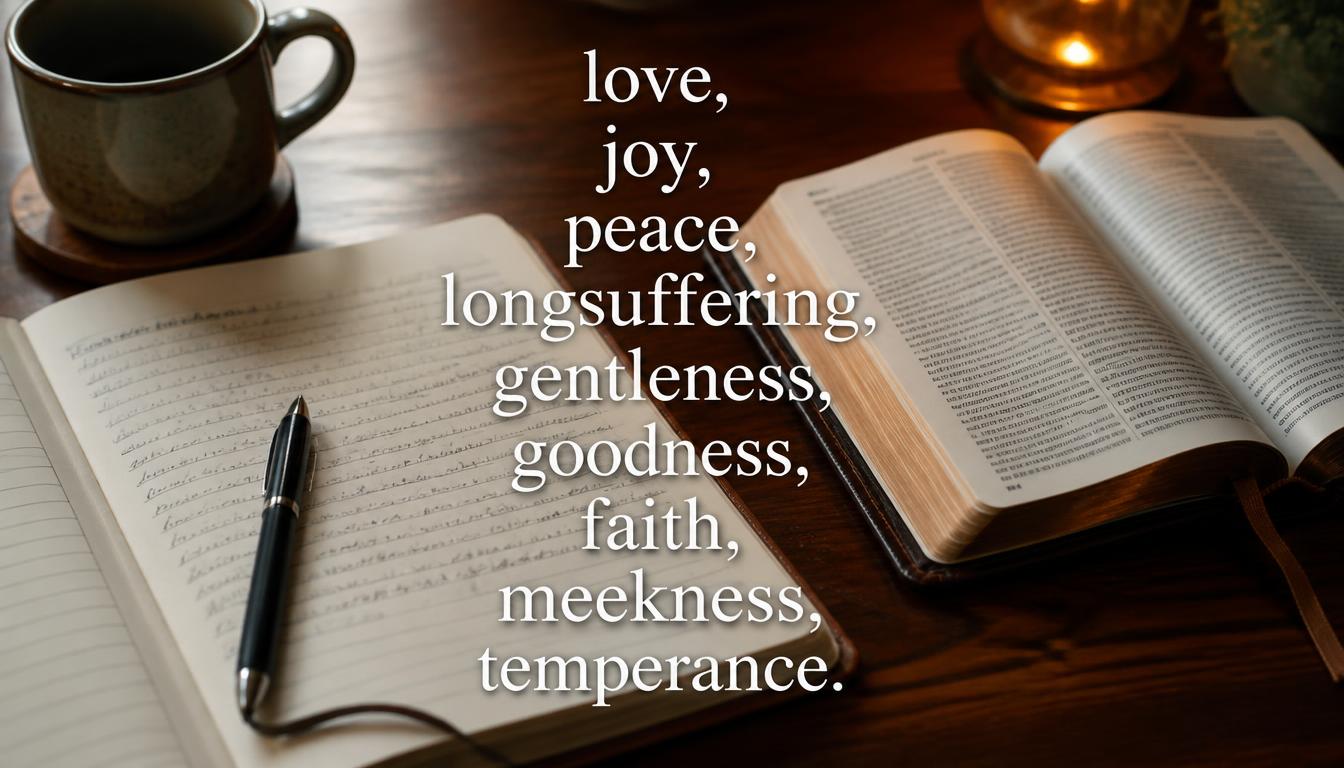
Galatians 5:22-23 lists nine qualities Paul describes as the fruit of the Spirit: “love, joy, peace, longsuffering, gentleness, goodness, faith, meekness, temperance” (Galatians 5:22-23, KJV). Unlike a list of rules to follow, this reads as a description of Christian character that develops as the Holy Spirit works in someone’s life — the passage explicitly calls it fruit, not fruits, framing it as one connected pattern rather than nine separate boxes to check.
This list also works as a practical diagnostic for spiritual growth. Someone wondering whether their life of faith is actually deepening can ask a concrete question rather than a vague one: Is there more patience in me now than a year ago? More gentleness under pressure? That’s a more honest gauge than simply feeling more religious.
Everyday Habits of a Christ-Centered Life
Character doesn’t form in a vacuum. Scripture consistently ties spiritual growth to specific, repeated practices — not as a checklist to earn favor with God, but as the ordinary means by which walking with God actually happens day to day.
Prayer and Bible Reading as Daily Practice
Philippians 4:6-7 connects prayer directly to peace: “Be careful for nothing; but in every thing by prayer and supplication with thanksgiving let your requests be made known unto God. And the peace of God, which passeth all understanding, shall keep your hearts and minds through Christ Jesus” (Philippians 4:6-7, KJV). The passage connects prayer and thanksgiving with God’s peace, showing how bringing anxiety to God can shape the believer’s response to difficult circumstances.
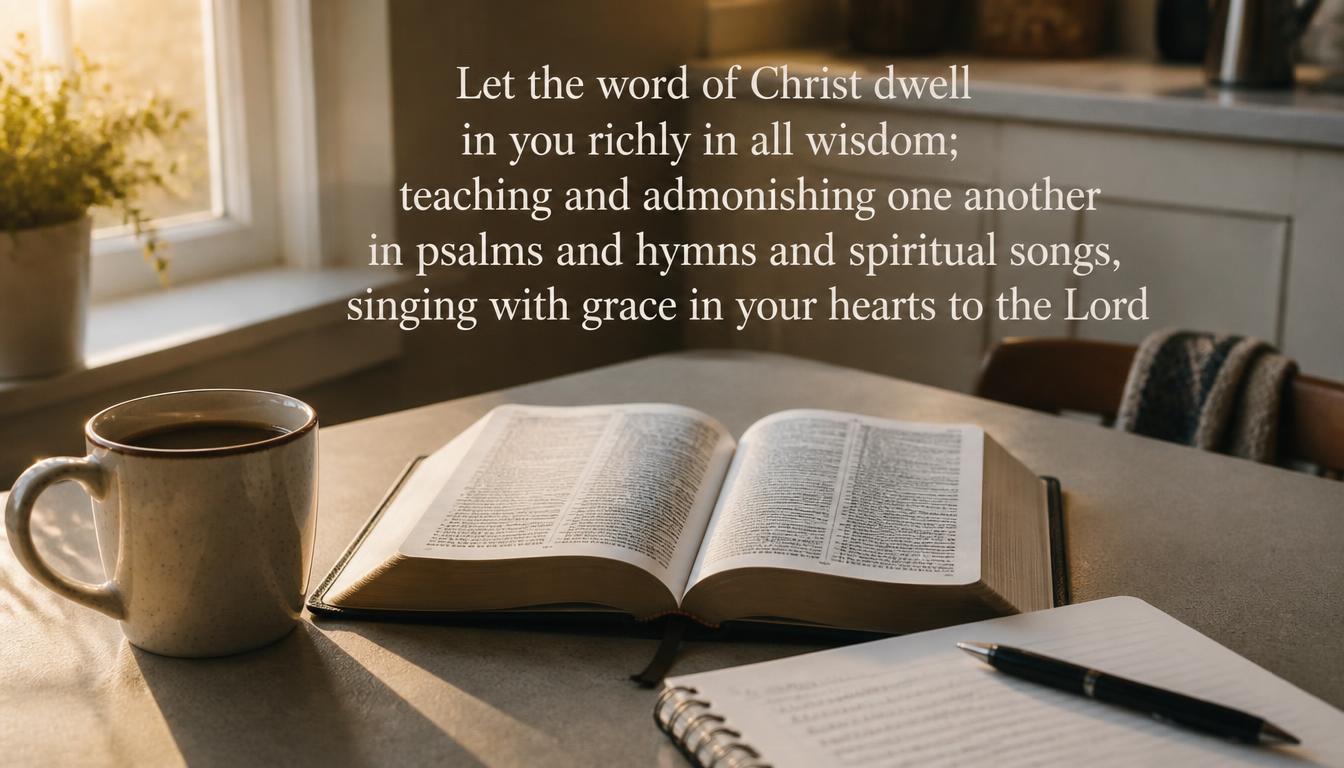
Colossians 3:16 connects the new life in Christ with letting the word of Christ dwell richly in believers: “Let the word of Christ dwell in you richly in all wisdom; teaching and admonishing one another in psalms and hymns and spiritual songs, singing with grace in your hearts to the Lord” (Colossians 3:16, KJV), making Scripture central to how that new life is shaped.
Bible reading complements prayer by continually bringing Scripture into the believer’s thoughts, decisions, and habits. For readers wanting a practical starting point, this guide to Bible highlighting covers one simple method for reading with more attention and retention, and this daily morning prayer guide offers a starting structure for building the habit.
Neither practice requires a fixed formula. Christian traditions differ widely on structure here — some follow set daily offices or liturgical prayers, others keep it entirely free-form, and Scripture itself doesn’t prescribe one method as the only valid one. What both practices share, across traditions, is regularity: something practiced often enough actually to shape a person, not just referenced occasionally.
Christian Community, Fellowship, and Serving Others
Discipleship rarely happens in isolation. The New Testament consistently pictures faith as something worked out in community — believers gathering, teaching each other, and serving one another rather than pursuing growth entirely alone.
That community element also shows up practically in service: biblical principles around love and generosity don’t stay theoretical when they’re applied to a specific person’s specific need, whether that’s time, encouragement, or material help.
This is another area where practice varies by tradition — church structure, frequency of gathering, and specific forms of service differ considerably across denominations. The New Testament consistently presents Christian faith as something lived out through relationships, mutual encouragement, and service, rather than as a completely isolated experience.
Love, Forgiveness, and Christian Character
Love isn’t presented in Scripture as one virtue among many — it’s given a kind of priority the other qualities build around. Jesus ties love directly to Christian identity in John 13:34-35: “A new commandment I give unto you, That ye love one another; as I have loved you, that ye also love one another. By this shall all men know that ye are my disciples, if ye have love one to another” (John 13:34-35, KJV). That connects Christian character to something observable, not just internal.
Forgiving Others the Way God Forgives
Ephesians 4:32 ties forgiveness directly to how God has already treated the believer: “And be ye kind one to another, tenderhearted, forgiving one another, even as God for Christ’s sake hath forgiven you” (Ephesians 4:32, KJV). The structure of that instruction matters: forgiveness here isn’t framed as owed to someone who’s earned it, but modeled on forgiveness the believer has already received.
That doesn’t make forgiveness simple in practice. Scripture doesn’t say much about the emotional process of getting there, and Christian traditions differ on questions like whether forgiveness requires reconciliation, or how it applies to ongoing harm. What the text is clear on is the direction: forgiveness is presented as something to extend, not something contingent on the other person’s response. Readers working through a specific situation involving forgiveness can find a prayer for forgiveness of sins as a starting point.
Humility, Patience, and Kindness in Daily Interactions
Colossians 3:12-13 lists several qualities together, instructing believers to “put on” mercy, kindness, humbleness of mind, meekness, and longsuffering as a kind of daily posture, forbearing one another and forgiving grievances as they come up (Colossians 3:12-13, KJV).
The passage groups these qualities specifically around getting along with other people, which fits their most common test: not big moments, but ordinary friction — a disagreement, a slight, an annoying coworker.
Living like Christ in this sense is less about dramatic gestures and more about how someone handles the small, repeated interactions that make up most of daily life. For more on how God’s love specifically shapes this pattern, see this page on God’s love.
Christian Living at Work and in Relationships
Ordinary settings test Christian character just as much as obviously spiritual moments do — a job, a family dinner table, situations where nobody’s watching for it specifically.
Christian Character in the Workplace
Colossians 3:23 instructs believers, “And whatsoever ye do, do it heartily, as to the Lord, and not unto men” (Colossians 3:23, KJV). Worth noting: this instruction was written specifically to servants regarding their work for earthly masters, part of a broader passage addressing household relationships.
Many Christians today apply the underlying principle more broadly to any kind of work — the idea that effort and integrity on the job matter because they’re ultimately offered to God, not just to an employer. That’s a reasonable extension of the verse’s principle, though it’s worth distinguishing from what the passage explicitly addresses.
In practice, this shows up as consistency between how someone behaves at church and how they behave at work — honesty in small things, doing a fair day’s work, treating coworkers with the same respect regardless of who’s watching. This collection of verses on working hard covers more Scripture on this specific theme.
Living Out Your Faith at Home and in Relationships
1 Peter 4:8 sets a high bar for relationships close to home: “And above all things have fervent charity among yourselves: for charity shall cover the multitude of sins” (1 Peter 4:8, KJV). The verse doesn’t suggest love excuses wrongdoing — it points to something more specific, a persistent, patient love that doesn’t keep a running tally of every offense from the people someone lives closest to.
That’s often harder to practice at home than anywhere else, precisely because family and close relationships involve the most repetition — the same small irritations, day after day. This collection of Bible verses about relationships offers more Scripture specifically addressing that territory.
Christian Living Through Struggle, Doubt, and Trusting God
Life of faith isn’t presented in Scripture as a straight line from belief to confidence. Doubt, failure, and seasons of not knowing what to do next show up throughout the Bible, including in the lives of people Scripture holds up as faithful — this isn’t a sign that something’s gone wrong.
What to Do When You Fail or Doubt
James 1:5-6 addresses uncertainty directly: “If any of you lack wisdom, let him ask of God, that giveth to all men liberally, and upbraideth not; and it shall be given him. But let him ask in faith, nothing wavering” (James 1:5-6, KJV). This passage treats doubt as something to bring to God directly, not as a disqualifying failure to hide or resolve alone — wisdom is available for the asking, not reserved for people who never waver.
Failure gets addressed differently elsewhere in Scripture, but the pattern is similar: confession and honesty about it, rather than pretending it didn’t happen, is consistently the starting point for moving forward. For readers in a season that feels more like being lost than confident, this page addresses that specific experience directly, and this collection of verses for anxiety covers the overlap between doubt and worry that often shows up together.
Trusting God’s Will When the Path Isn’t Clear
Proverbs 3:5-6 is one of the most direct instructions in Scripture on this exact tension: “Trust in the LORD with all thine heart; and lean not unto thine own understanding. In all thy ways acknowledge him, and he shall direct thy paths” (Proverbs 3:5-6, KJV). The promise here is directional rather than predictive — trust and acknowledgment lead to guidance, which is a different claim than instant, advance clarity about the path.
Obedience to Scripture in this area often looks less like waiting for a clear sign and more like making the next faithful decision with the information available, and trusting the outcome rather than needing certainty first. This collection of verses on trusting God’s timing goes deeper into that specific tension between wanting clarity and being asked to trust anyway.
Common Questions About Christian Living
What does it mean to live a Christ-centered life?
It means letting belief in Jesus shape actual behavior — obedience, love, forgiveness, and character formed by the Holy Spirit over time — rather than treating faith as private belief with no visible effect on daily choices.
How do I grow spiritually as a Christian?
Scripture points to consistent practices — prayer, reading Scripture, community, and service — as the ordinary means of growth, though specific methods vary across Christian traditions. Growth is described as gradual, not instant.
What are the fruits of the Spirit?
Galatians 5:22-23 lists nine qualities: love, joy, peace, longsuffering, gentleness, goodness, faith, meekness, and temperance. Scripture describes these as one connected pattern of character, not separate achievements.
How do I forgive someone according to the Bible?
Ephesians 4:32 models forgiveness on how God has already forgiven the believer, not on whether the other person deserves it. Scripture is clear on the direction — extend it — though it says less about the emotional process of getting there.
What does discipleship mean?
Discipleship refers to following Jesus’s teaching and example while helping others do the same, often within Christian community rather than in isolation. Its specific structure — mentorship, small groups, formal programs — varies by tradition.
How do I know God’s will for my life?
Proverbs 3:5-6 ties this to trusting God and acknowledging Him in daily decisions, promising direction rather than instant clarity. Many believers describe this as becoming clearer over time through faithful next steps, not as a single answer received in advance.
Conclusion
None of this works as a formula — pray this much, read this often, and character will follow on schedule. Scripture doesn’t present it that way. What it does present is a consistent pattern: belief that shows up in action, character shaped slowly through ordinary practices, love that extends to forgiveness, and trust that holds even when the path ahead isn’t clear. That’s available in the middle of doubt and failure, not just after they’re resolved.
If one part of this resonates more than the rest right now, that’s usually a reasonable place to start — a specific verse to sit with, a habit to try this week, a relationship where forgiveness is overdue.
Related Resources
- Prayers for Every Moment
- Bible Study: A Complete Guide to Studying Scripture
- Bible Verses
- Bible Highlighting Guide
- A Powerful Morning Prayer Daily Guide
- A Prayer for Forgiveness of Sins
- God’s Love
- Bible Verses About Working Hard
- Bible Verses About Relationships
- When You Feel Lost
- Bible Verses for Anxiety
- Bible Verses About Trusting God’s Timing


